Tamam
Fintech mobile app for digital payments and remittance — from onboarding and KYC to wallet flows, transactions, and scalable mobile UI patterns.

Bring structure to a fast-moving fintech ecosystem.
The work moved across multiple Tamam directions — from mobile app flows and back-office tools to websites, custody materials, pitch decks, and identity. The challenge was to quickly understand each context and shape it into product experiences and materials that felt credible, consistent, and ready to support business conversations
One system for the whole ecosystem
Tamam was growing into several products, and building each one from scratch would repeat the work and let them drift apart. So I built one design system for iOS, Android and web with the first app, then carried it over to the back-office and Mirsad.
One rule for right-to-left
In Arabic, text runs right to left, but numbers inside it still read left to right, so a mirrored amount is simply wrong. So the system has one rule: layouts mirror, numbers and amounts never do. Arabic screens follow it without fixes screen by screen.
Roles without developers
Admins need to change who can do what without waiting for a developer. So the back-office has a 3-step role builder for permissions.
Logo
The identity system was built around one recognizable Tamam mark that could stretch across multiple product directions — keeping the ecosystem connected while allowing each product to carry its own color and tone.
Logo system
The mark was shaped around movement, direction, and financial flow. A shared logo structure helped connect Tamam’s product ecosystem, while color coding gave each direction its own role, tone, and visual presence.
Mobile app
The mobile app shaped Tamam’s customer-facing experience — helping users move through onboarding, KYC, wallet actions, transfers, security, support, and bilingual screens with less friction.

Onboarding and verification
A guided setup flow helped users move through account creation, PIN setup, personal details, KYC, and profile completion without losing context.
Websites
The websites translated Tamam’s product directions into public-facing experiences — presenting both the consumer fintech product and the custody offering with a more credible and organized product story.
Tamam website
The public websites gave Tamam’s product directions a more credible, organized presence — presenting both the consumer fintech product and the custody offering as a clear, trustworthy product story.
Back-office
The back-office supported Tamam’s internal operations — helping the team review users, monitor transactions, manage product activity, and keep operational workflows structured.
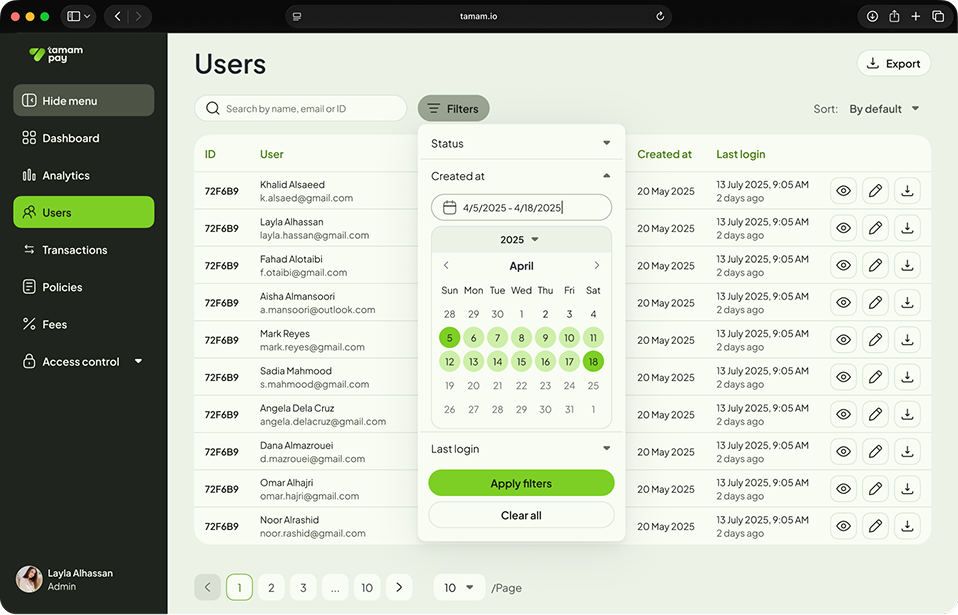
Users management
A structured user workspace helped the team search, filter, review, and export customer records without losing visibility across account statuses and activity.
Pitch deck
Pitch materials helped package Tamam’s product and ecosystem context into a format that could support business, investor, and stakeholder conversations.
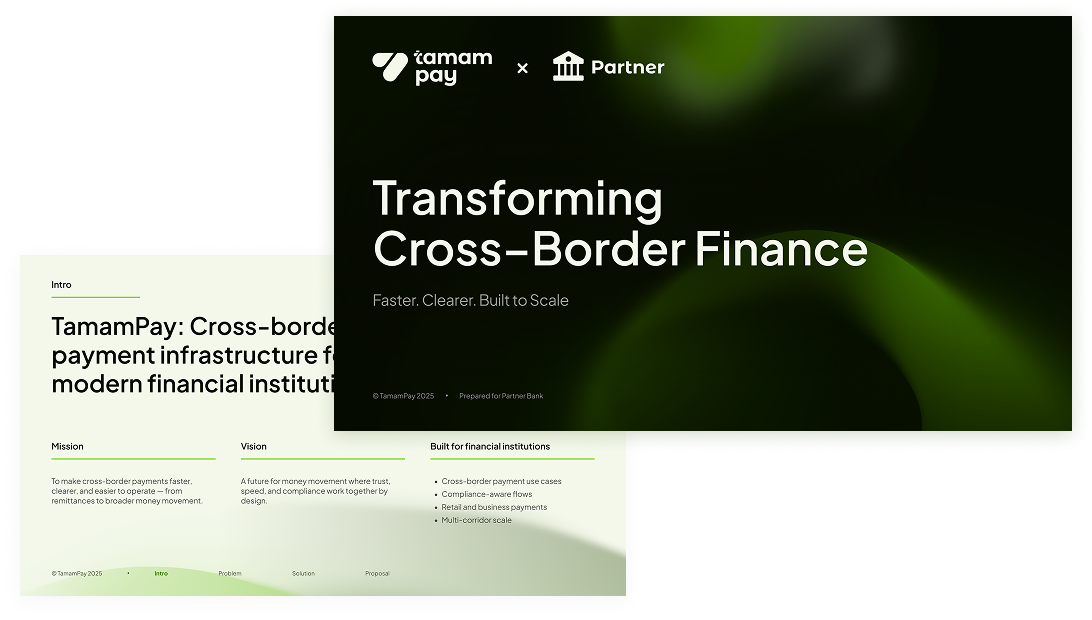
Ecosystem story
Tamam’s broader fintech ecosystem was shaped into a presentation story — helping stakeholders understand how its product directions connect across mobile, custody, payments, and business-facing materials.
Tamam's directions came together into one coherent ecosystem under TamamOS. The consumer mobile app, public websites, back-office, and pitch materials started speaking the same language — making the product easier to use, easier to explain to partners and investors, and more consistent to build, as multiple directions connected into a single, credible product story. TamamPay, the ecosystem's payment layer, is now included in a Hedera case study covering its cross-border settlement and compliance architecture.